Showing posts with label Metra. Show all posts

Tuesday, May 4, 2021

As of Monday Metra is hiring for 100 positions


[VIDEO] I've been meaning to share this with you all for a while, Metra is looking to hire for 100 positions for our region's commuter railroad. If you're a railfan at least this would be a great fit, hmmm it gets me to think because I like trains.

Either way you see above a story regarding this that aired over the past weekend on WGN and WBBM-TV noted this also. Applications are only accepted online through Metra's career page.

Metra's hiring is likely as a result of greater traffic being expected once things open up after over a year of coronavirus restrictions. We might be headed towards a bridge phase as soon as next week and after that hopefully society can begin to go back to some form of normal.

And again if you have any questions about the coronavirus vaccine ask a medical profession.

Friday, October 4, 2019

Metra Electric: Proposal to expand service to south side & south suburbs #Ward09

The above segment aired on Chicago Tonight earlier this week. The plan proposed by Cook County Board President Toni Preckwinkle to create a pilot proposal to expand Metra Electric service to the south side and south suburbs. Unforunately newly minted Mayor Lori Lightfoot is opposed fearing a potential drop in CTA ridership.

Chicago Tonight's Carol Marin speaks with Andrea Read co-chair of Coalition for a Better Metra Electric and executive director of the Greater Roseland Chamber of Commerce.

RELATED: Red Line extension slipping away?


Friday, September 20, 2019

Increased Metra service on Chicago's south side affects CTA service?

From the Tribune yesterday:
County Board President Toni Preckwinkle cemented a plan to lower fares and increase service on both the Metra Electric and Rock Island train lines at the center of a racial equity agenda presented to the City Club of Chicago earlier this week — saying the effort would help ensure South Side and south suburban residents have better access to transit.

“This is what equity investments in transportation look like," Preckwinkle said of what she described as a three-year pilot plan that would advance with financial support from the county government.

Lightfoot’s not convinced. The fare reduction plan would have “a dramatic effect” on the Chicago Transit Authority, the mayor told reporters Wednesday.

“I’m not in favor of it based upon the analysis that we’ve done," Lightfoot said. "I’ve spent some time talking with (CTA President) Dorval Carter about it, and it looks like it is essentially a transfer of CTA passengers to the Metra line.

“Obviously there’s an area of the South Side where we need to have better transportation services," Lightfoot said. "That Metra line is underserved, and I’m absolutely willing to work with Metra and the county, but this particular proposal I think causes problems for the CTA and I’m not going to support something that would have the effect of diminishing ridership at the CTA.”
I think increased service on the Metra Electric at least could be a good thing. I do hear there are those public transit users who prefer taking Metra over taking the L. I think at current the increased service on the south side and even the close in southern suburbs could be great.

At the same time, one could wonder how this could affect future CTA service upgrade. For example could increased service on Metra Electric through Pullman and Roseland affect the future CTA Red Line Extension.

Friday, July 26, 2019

A proposal for CTA fares to ride Metra

Metrarail.com
There is a proposal to make riding Metra's Rock Island and Electric lines as affordable as a CTA fare. Would this make some of you more likely to take Metra to where you need to go? Via Curbed Chicago
A plan to reduce fares and boost service on Metra rail lines serving Chicago’s Far South Side and southern suburbs is building momentum. Officials hope cheaper and more frequent service on Metra’s Electric District and the Rock Island District lines will reverse declining ridership.

If realized, the move would cut ticket prices from the current level of $4 to $5.50 down to $2.50—the same price as a ride on the CTA’s L system. Details such as timing and any financial subsidies from Cook County are still being ironed out, the Chicago Tribune reported this earlier week. Officials are also exploring offering free Ventra transfers between Metra, CTA, and Pace.

A recent mobility study found that although southern Cook County has a higher proportion of transit-dependent residents, the area is lagging when it comes to transit access. Cheaper fares and more frequent service could boost ridership by as much as 33 percent and even lead to a net increase in revenue, according to the study.
I hope they can follow this up with some plans to upgrade some of the Metra stations - especially on the Metra Electric line. Then again we would have to see if these stations see an increase in activity.

Monday, May 13, 2019

Metra upgrades and slashing Metra Electric fares...

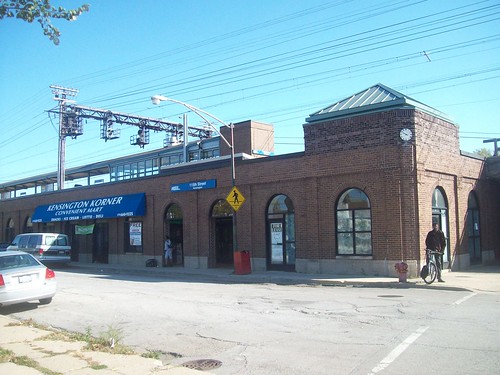
[VIDEO] As there is a bill being proposed in Springfield that would fares on the Metra Electric line in the city, perhaps I should share this story. This aired on CBS Chicago on May 9, 2019 and was shot at the Metra station at 115th Street or in Metra parlance Kensington. It illustrates the need for upgrades to Metra stations.

The aforementioned bill to cut fares to ride the Metra Electric line within the city limits is designed to make riding that route within the city a more attractive option and was introduced by local state representative Marcus Evans (D - 33rd District). From the Tribune on May 7, 2019:
The bill, introduced by Illinois State Rep. Marcus Evans, Jr., a Democrat, would set fares for Metra Electric trips within the city as equal to CTA rail fares, which are $2.50 at the regular rate. Metra Electric fares within the city currently range from $4 to $5.50 for a single ride.

South Side community activists have long discussed converting the Metra Electric line, which runs from downtown into the south suburbs, into a rapid-transit line with more frequent stops to make up for a lack of rapid transit options on the far South Side.

“It’s a quality-of-life issue,” said Linda Thisted, co-chair of the Coalition for a Modern Metra Electric, which supports the bill. “A lot of people can’t afford Metra Electric fares so they take really slow buses. This could transform the South Side and the South Shore.”
...
Expansion of South Side service through Metra could be less expensive than a parallel expansion of the CTA’s Red Line south from 95th Street to 130th Street, which will cost about $2.3 billion. The CTA is planning the extension, though it does not yet have the money to pay for it.

Metra said it was willing to discuss the proposal, which also would allow Metra Electric riders to use the Ventra card to get on the train.

“We would look forward to working with Rep. Evans and others to determine whether doing this is feasible and affordable,” said Metra spokesman Michael Gillis.

Thursday, January 24, 2019

Hinz: Expand Metra before extending Red Line to 130th Street? #ChiMayor19

Red Line Extension
This is for those of you who would support Mr. Paul Vallas for Mayor of Chicago and especially if you live in the area that could benefit from the red line extension.
Wading into a debate that’s been waging for years over how to best bring more fast-train service to areas of the South Side that primarily have to rely on buses, Vallas says it appears that pursuing the Metra work "may be the more viable alternative" than extending the Red Line south to 130th Street, as outgoing Mayor Rahm Emanuel wants.

In an interview after unveiling his overall transportation plan, Vallas said he wouldn’t use the word "shelve" to describe his views on the Red Line project. But the Metra Electric work "is more viable, at least financially," Vallas said. "In the absence of a funding solution for the Red Line, the Metra Electric may be an affordable alternative."

The Red Line extension would cost an estimated $2.3 billion, money the CTA does not have. Emanuel hopes to get some funding in a new state capital bill that Gov. J.B. Pritzker and lawmakers are working on, but the CTA has other huge capital needs, including likely billions to finish reconstruction of the Red Line north.

In comparison, upgrading the Metra Electric service to CTA-like frequencies—perhaps every 10 or 15 minutes rather than every hour—could cost as little as $400 million by some estimates. And it possibly could occur more quickly, since a line already exists.
Read the whole thing 

Thursday, June 14, 2018

Chicago Reporter: Instead of extending the Red Line, some see promise in the Metra Electric

Red Line Extension
The future of the greater Roseland area will be affected by the future CTA red line extension. It's something that I'm very excited for and evidently the debate continues over whether or not this is the transit project the far south side of Chicago needs right now.

Another part of this debate - especially with the uncertainty of funding for this project which is only expected to be built during the course of the next decade - includes improvement of the Metra Electric line. Better yet should the Metra Electric (or IC for you old timers) be converted to a rapid transit line operated instead by CTA.
In January, the city announced the final alignment for the 5.3 mile extension to 130th Street. That’s key for the CTA to secure $1 billion in federal funding needed for the project that wouldn’t see construction start until 2022. Though the city has proposed using transit TIFs (tax increment financing) to fund part of the extension, some transit advocates contend that wouldn’t be nearly enough to make a dent in the cost. And others question whether the Trump administration would give the city $1 billion for a project of this scope.

Some transit advocates say there is a quicker and less costly way to improve transit on the South Side by converting the Metra Electric District (MED) main line into rapid transit. Retrofitting Metra’s existing rail infrastructure to accommodate rapid transit, they say, could be completed in less time than it would take to build the extension and without displacing privately owned properties, as the Red Line extension would.

But putting the Red Line extension on the backburner where it has sat for decades would be a disservice to the Far South Side, community members say. Mayor Richard J. Daley promised to extend it beyond its 95th Street terminus when he cut the ribbon on the transit line nearly 50 years ago.
A former candidate for 9th ward alderman - well not identified as such in the article - was quoted in this piece:

South Side resident Michael LaFargue says extending the Red Line south is all about equity – transit equity, economic equity and environmental equity. The loss of manufacturing jobs, he said has devastated the Roseland community economically while lack of rapid transit has made access to jobs and opportunities even more difficult.

The 111th Street station, LaFargue added, could be branded as Greater Roseland Hospital Medical District similar to the Blue Line’s Illinois Medical District. The Michigan Avenue station could reinvigorate that mile-long business corridor, making it the ‘Magnificent Mile South,’ he said.

“This is a catalyst for economic development and branding,” said LaFargue, president of the Red Line Extension Coalition, a community-based group.
And what's the difference in cost?
Policy analyst Daniel Kay Hertz of the Center for Tax and Budget Accountability says both projects are important and would have significant impact. He estimated a cost of $27 million per mile to convert the Metra Electric’s South Chicago branch into rapid transit. Hertz based that figure off a 2012 Chicago Department of Transportation report  which puts the cost of converting MED’s South Chicago branch to Millennium Station — not the entire line — at $350 million. Hertz said there’s no reason the per-mile costs would differ substantially to convert the entire MED line. In comparison, the Red Line extension would cost about $434 million a mile.

“It is basically logistical stuff that they need to do as opposed to the physical engineering and  construction of several miles worth of new rail lines and stations,” Hertz said.
Finally a brief history of the Metra Electric and the advocacy for it's conversion to a CTA rapid transit line:
The MED originally ran as rapid transit and the line’s South Chicago branch ran every 10 minutes during the 1940s under its then-operator, Illinois Central. That frequency reduced when it became part of the Regional Transit Authority. Now the line has frequent service during peak evening and morning hours but runs every one to two hours during the mid-day.

The idea to convert the commuter-rail into CTA-style “L” service resurfaced again when transit advocate Mike Payne touted the plan as the Gray Line in the 1990s. It has gained traction in recent years thanks to advocacy groups like Coalition for a Modern Metra Electric and Active Transportation Alliance who want the MED to run every 10-15 minutes. Last year Metra increased mid-day frequency on the line to every 20 minutes between Hyde Park and Millennium Station.

But Metra’s fare structure could create a burden for low-income riders. Metra’s fares are distance-based where CTA charges a flat fee. And since there is no fare integration between Metra and CTA, riders would have to pay two full fares. There’s no fare discount to transfer from one transit system to the other.
What do you all think? Metra Electric (especially serving segments within the city) converted to the "grey line" operated by CTA  or the red line extension which certainly could benefit residents south of 95th through to Altgeld Gardens or perhaps there is a way to make both happen?

Found this article via Chicago-L.org.

Wednesday, June 29, 2016

Discussions on converting Metra Electric to a rapid transit line


Found this article via Sloopin that was published on June 24. There is official interest in turning the Metra Electric Line into a rapid transit service with more frequent trains.
A proposal to convert the Metra Electric District Line into a rapid-transit line with more frequent stops to serve the South Side and suburbs has drawn the interest of Mayor Rahm Emanuel, who has asked the head of the Regional Transportation Authority to facilitate discussion on the issue, RTA officials said.

During the transit agency's monthly board meeting Thursday, Chairman Kirk Dillard told a representative of a coalition of South Side and south suburban groups that Emanuel had reached out to him about the rapid-transit idea last month, and that talks had begun.

Dillard said he spoke with Metra Chairman Martin Oberman about the proposal Wednesday.

"The RTA is working with the CTA and Metra," Dillard said after the meeting. "We need to get a handle obviously on the finances, as well as ridership numbers historically in that area. We're in the preliminary fact-finding stages."
We've been hearing about grassroots proposals to turn the Metric Electric (aka IC line) into a rapid transit service as opposed to a commuter rail service. It even has two different color designations such as the Gray or Gold Line.

Question to ask here is how this could benefit the many communities on the far south side if there was more frequent service on the Metra Electric line if CTA institutes more frequent service? This could very much benefit the neighborhoods of Pullman, Roseland, West Pullman, South Shore, South Chicago and perhaps even the near suburbs of Riverdale. And hopefully wouldn't take as much time to institute as finally building the CTA Red Line extension from 95th to 130th Streets.

BTW, part of me wishes that instead of using those double decker Metra coaches prevalent on all Metra lines if only it was possible to turn this into a typical third rail service instead of overhead traction. Perhaps find a way to connect this to the L system at some point. Perhaps more express service for Metra Electric & South Shore riders coming from the south suburbs and Indiana

Better yet if only such service could exist along the Metra Electric's South Shore and South Chicago branch and it could be converted to a third rail service. I realize these are all questions of later study and probably won't be instituted immediately. Even the Yellow Line aka Skokie Swift had been in service years before it was converted to a third rail traction line.

Friday, February 21, 2014

Chicago Mag: Why Are Chicago Metra Stations So Bad, When the Suburban Stops Are So Nice?

Kensington/115th Metra Station by Strannik45/flickr
So I'm going to assume that a reader sent this question to Chicago Magazine's Dennis Rodkin about Metra Stations in the city. We do have Metra stations nearby especially the Metra Electric stations nearby.
Follow the money. In the 1970s, legislation that resuscitated various dying commuter rail and bus lines in northern Illinois mandated that nearly all transportation taxes collected within Chicago limits go to the Chicago Transit Authority, which was in dire straits even back then.

The CTA, of course, runs the city’s buses and el trains. By contrast, Metra makes its money from suburban tax dollars (more than half of transportation taxes in the suburbs go to Metra; the rest is split between the CTA and Pace). As a result, says Chicago geographer and historian Dennis McClendon, “Metra doesn’t have much of a constituency to cater to in the city.” A Metra spokesperson did not respond to a request for comment.

Which isn’t to say that Metra ignores city commuters completely. It is currently overhauling the Ravenswood station, with Edgewater and Auburn Park stations soon to follow.
Last year I wrote about the isolated Metra Electric stop at 95th/Cottage Grove. The pic above is the 115th/Kensington Station in Roseland further south. It is considered one of the busiest stations on the Metra Electric line

Would you like to see greater investment in local Metra stations on the south side?

Wednesday, August 7, 2013

DNA Info: Bobby Rush Denies He Sold Out Englewood for $50K

US Rep. Bobby Rush
This has been in the news recently a growing scandal at Metra. The CEO resigned and it started off with a severance package for him and then allegations of political influence for some employees to get raises and then the chairman of the board of Metra resigns and also several other Metra board members resign. This includes businessman Larry Huggins who resigned last week.

It appears Congressman Bobby Rush has found himself ensared in this scandal because of his role in the Englewood flyover:
U.S. Rep. Bobby Rush (D-Chicago) said Tuesday he never tried to force Alex Clifford, the former CEO of Metra, to pay a Washington, D.C., organization $50,000 to monitor a federally funded transit project in his South Side district.

Instead, Rush said he only suggested the National Black Chamber of Commerce because he was asked to make a recommendation by Metra for the $93 million Englewood "flyover" bridge project.

"I did not speak to anyone at Metra directly. Someone from Metra called my office and made the request," Rush said at a news conference in Englewood.

Clifford has said that he was forced out of his job at the metropolitan rail agency after resisting pressure by powerful politicians in hiring and contract decisions, and named Rush in a memo.

Metra ultimately refused to pay the Black Chamber of Commerce to monitor hiring.

Saturday, May 25, 2013

What would you like to see happen around the Metra station on 95th/Cottage Grove?

This is more than appropriate given that now the Red Line is finally closed for repairs. One can only wonder how many more passengers this Metra Electric Station at 95th/Cottage Grove will get. Metra is already positioning themselves as an alternative to the alternatives provided by the CTA for those who are affected by the reconstruction of the Dan Ryan branch of the L.

If you regularly use this stop on the Metra Electric it's only a flag stop and a train will only stop there at designated times. The pictures below shows how busy this station is and it's safe to say not very. Alas what I neglected to depict were all the passengers who are boarding, getting off, or waiting for a bus. Sometimes it seems there are a lot of people who are here to wait for a bus whether they are going further east, south, west, or even north.

Of course this doesn't mean that this intersection doesn't deserve attention. Perhaps there should be more action on this corner than vacant buildings, vacant lot and a gas station. Let's also remember that there is a university nearby at Chicago State. This intersection could have more activity here.

The pic above is of a building that's adjacent to the entrance to the Metra station under the viaduct. Let's not forget that in winter 2012 this was the site of an armed robbery while some passengers were waiting for a train. If this building remains it would be a great idea if there was a way to allow for passengers to enter the station through this building instead of having to walk under this viaduct.
This is the northwest corner of 95th/Cottage and it contains a service station. It had been a vacant lot for many years and I'm not certain when this had been built but certainly it's progress. Also there is a food store inside in case you want grab a bite while you wait for a bus.

This is the northeast corner where a building that remains vacant is located. Surely a use could be found for this building especially for the commuters who utilize the bus stops at this intersection everyday. North of the building as you can see is a lot that remains vacant waiting for a developer to come up with a use for that property.

The photos below is from the 95th Metra platform. The first is looking towards the campus of Chicago State University and the other is looking towards the building at 95th Street.


In light of the robbery at that station last year there were many in the community who were seeking ways to make this area safer for commuters. The question here is what would you like to see happen here? Does this Metra station have the ability to generate more traffic to this area even after the reconstruction of the Dan Ryan branch is complete? Also could this station be an asset to the students at Chicago State University?

Tuesday, May 14, 2013

Are you planning your alternatives to the Red Line starting May 19th?

If you check out the Red Line South project website, you will see that there will be "ambassadors" who will be at the affected locations through May 16th. You may want to talk to them about all the details regarding the alternatives as the Dan Ryan line is shut down for five months. As a matter of fact on May 1, you may have had the chance to talk to an ambassador at 95th Street who just so happens to be Forrest Claypool President of the CTA which is what you see in the photo below.
Courtesy of @RedLineSouth
Anyway, in spite of that brief intro, we're here to discuss this recent article from the Sun-Times about how Red Line riders are planning to cope with this project. Some apparently are still unaware of the alternatives, discounts, and service levels that will be provided by CTA during the next 5 months. Also add to that the shuttles that will be used in lieu of the trains are free!

Friday, April 26, 2013

Tribune: Metra urges CTA riders to try its trains when Red Line closes May 19


Photo by strannik / flickr
While I was very sorry to have missed the very important Role Model Movement event that discussed the closure of the Dan Ryan branch of the CTA Red Line on Tuesday, the discussion continues. An article from the Chicago Tribune that shows Metra is coming up with an alternative during the course of the five-month project to rebuild the Dan Ryan branch:
Attention CTA riders: Metra has its eyes on you when the Red Line shuts down the South Side branch May 19 for major reconstruction.

The commuter rail agency is cooperating with the CTA to accommodate customers left scrambling during the five months when the 10-mile Red Line stretch from Cermak-Chinatown to 95th Street will be rebuilt at a cost of $425 million.

Metra said Thursday it would modify its schedule and ticketing to help the South Side branch's 80,000 weekday Red Line riders during the shutdown. But — no surprise here — Metra also wants to hang on to some of those customers.

"There's a great opportunity … to get (CTA) riders to stay with us," Metra marketing chief Robert Carlton told board members at a recent meeting.

In addition to the CTA's previously announced plans for alternative service for Red Line riders, Metra's Electric and Rock Island lines would be good options, officials said.
Also:
The CTA, Metra and Pace also will offer a new fare package to accommodate Red Line customers. It will include a special CTA/Pace five-day pass and a Metra 10-ride ticket.

The CTA does not normally offer a five-day pass, and it will be priced at a discount, the agency said.

The five-day pass/10-ride ticket package will cost $52 for Metra Zone B riders; $64 for Zone C; and $74 for Zone D.
For those of you who might dread having to take a shuttlebus to Garfield in order to continue your commutes to downtown Chicago at least there are viable alternatives. This five-month shutdown will certainly be a pain, but hopefully when the Dan Ryan branch (or Red Line south) is back online there commutes should be much better!

Monday, July 16, 2012

Tribune: Metra approves controversial Englewood flyover contract

The controversy was over jobs for local residents in this $141 million project:
Metra's board of directors today approved a $93 million contract for construction of a railroad bridge on the south side that three congressmen had threatened to block because they said it would not provide enough jobs to African Americans in the economically depressed neighborhood.

The approval came after Metra chairman Larry Huggins said a deal had been worked out between the congressmen, led by Bobby Rush, to guarantee jobs for residents of the Englewood community.

Rush in May had threatened to stop the project unless there were more jobs for the community.

Details of the agreement were not immediately disclosed.
...
The contract was awarded to the low bidder, IHC Construction and Illinois Constructors Joint Venture.

Huggins said he was told the contractor has agreed to increase minority and disadvantaged business (DBE) participation in the contract from 25 percent to about 40 percent.

Twenty-five percent DBE participation is the amount required by law
.

Wednesday, June 13, 2012

SBA Presents: Bonding Is Achievable Seminar for Contractors


SBAMetra demystify contracting at CSU daylong seminar
“Bonding Is Achievable” provides a workable roadmap to contracts, job creation
 
June 12, 2012 — For small and minority contractors, the ability to secure bonding is the missing link that locks them out of government contracts that could put them in the big leagues, according to Peter Gibbs, deputy director the U.S. Small Business Administration’s Office of Surety Guarantees.
 
From 8:30 a.m. till 4:30 p.m., June 21, the U.S. Small Business Administration, Chicago State University and Metra hosts a joint seminar to expose small and minority contractors to the ins and outs of meeting requirements of securing government contracts.
 
“Bonding is achievable,” says Gibbs, host of a daylong summit to be held in the university’s fourth floor library sunroom, 9501 S. King Drive. “The federal government actually guarantees the bonds of small contractors who need a leg up to secure their first government contract. This seminar puts contractors in the same room as contracting experts who will walk through the details and responsibilities of securing a government contract.”
 
Bonding is the mechanism that lets customers know a company is trustworthy and worthy of being insured. Bonding signifies a company has the financial foundation to fulfill obligations of a construction job, such as pouring cement building bridges and creating bike/walking paths. Bonding goes along with licensing and insurance, both affirmations that a contractor knows his business responsibilities in addition to his craft.
 
Specifically, the seminar will:
·      provide information on SBA’s Surety Bond Programs
·      inform participants on bonding and lending requirements
·      provide information on SBA’s District Office resources
·      inform participants of the SBDC training opportunities
·      provide information on local procurement opportunities
·      help navigate represented procurement organizations
·      assist with improving the back office of contractors
·      track the participants to their first bond and beyond
 
“Small businesses need to figure this out now because local, state and federal agencies are gearing up for billions of dollars in infrastructure improvements,” Gibbs says. “Participating at this level sustains businesses and pumps jobs into the economy.”
 
Admission is $25 and includes lunch. For more information, call Wanda Wright at CSU’s Office of Community Relations at 773.995.2079.

Monday, June 11, 2012

Transit agency says drastic closure plan is only a first draft


There may be some tweaks to the alternate service plan for the closing of the Dan Ryan branch of the Red Line by May 2013. Transportation columnist Jon Hilkevitch says that the plans drawn up by CTA is inadequate and perhaps some service alternatives need to be covered with Metra!
After the $425 million Red Line track replacement project was unveiled last week, Getting Around asked the CTA and Metra how they are working together to enhance access and CTA connections to the nearby Metra Electric and Rock Island lines.

Metra has excess capacity, particularly on "the Rock," where more service could be added and CTA buses serving Western Avenue and Halsted Street would in many instances travel shorter distances to Metra stations than the miles they would log from the Red Line to the Green Line.

We also strongly advised the transit agencies and the Regional Transportation Authority that adopting a commuter-friendly integrated fare policy will be vital during the Red Line disruptions.

Metra and CTA have separate fare structures and distinct fare-collection procedures. The best path would be keeping it simple, such as allowing commuters who have Metra monthly passes to use them on CTA and Pace, and for CTA and Pace fare cards to be honored on Metra.

The RTA and the transit agencies could work among themselves to divvy up the fares collected.
...
It will be important to allow riders to transfer seamlessly between the CTA and Metra without being hassled about the different fares — a solution that has eluded (or been avoided by) the Chicago area's mass transit network for decades.

The RTA faces a Jan. 1 deadline to submit a fare-integration plan to the transit agencies for input, approval and implementation. The Illinois Legislature has set a 2015 deadline for the RTA system to implement common fare media, also known as a universal fare card, to be accepted by all three transit agencies.

To their credit last week, CTA officials quickly realized it will take time to get it all right, which is why they pushed for an initial meeting with Metra operations officials for this week, said CTA spokeswoman Molly Sullivan.
Would anyone utilize either the Metra Electric and Rock Island lines to get downtown when the Red Line is closed next May?

Monday, June 4, 2012

Sun-Times: Beale predicts violence if Metra doesn’t hire more minorities for rail project

This Sun-Times article was sent to us via e-mail. We seem to have a tendency to post negative articles about 9th Ward Ald. Anthony Beale on this blog, but the reader heaps praise on him for his stance on Metra's Englewood Flyover project:
An influential alderman warned Metra’s executive director on Thursday that “people are going to get hurt” if the commuter rail agency fails to bolster minority participation on a $133 million South Side railroad bridge known as the “Englewood Flyover.”

Ald. Anthony Beale (9th), chairman of the City Council’s Transportation Committee, did not explain who he believed would “get hurt” or who the perpetrators might be. But, he was clearly referring to civil disobedience or maybe even violence at the construction site.

“I’m trying to help you help yourself. When I say that, problems could arise. When you look at a community like Englewood [that] is challenged and you have over $1 billion of work coming through and there’s no people of color working on that project, I’m afraid people are going to get hurt,” Beale told Clifford during Thursday’s committee hearing.

“When you look at the make-up of the community — when you look at the unemployment rate … in that particular community, it’s probably 35, almost 40 percent. … To have a contract come like this in the African-American community with less than one percent minority participation is an insult.”

Clifford said he “respects and appreciates” Beale’s point. But, he also stood his ground, arguing that Metra has “not done anything wrong” and “followed federal statutes to the letter.”

As required by federal law, Metra established a 25 percent benchmark for “disadvantaged business enterprises,” a category that includes any business with an annual net worth that does not exceed $1.32 million, Clifford said. That means small businesses as well as those owned by minorities and women.

“By federal statute, we are not allowed to set a minority target. If a bidder comes in and achieves that goal — 25 percent DBE — they have met the federal mandate. The federal mandate is what I must follow and I will not violate the law,” Clifford said.
Also it was noted in this e-mail that Metra Chairman, Larry Huggins owns a contractor business in Chatham. There was a question about how Huggins could've let this project possibly not allow for set-asides for minority contractors. And also the e-mail asks why Ald. Sawyer hasn't said much about this project and the sparsity of minority contractors.

Saturday, January 28, 2012

Armed robbery at a local Metra station

[VIDEO]This long neglected Metra Electric (or IC for you old timers) station was the scene of an armed robbery recently. The video above shows some screencaps of what was seen on surveillance cameras there from NBC Chicago. The quote I will share with you is from CBS Chicago:
At 1:38 p.m. on Jan. 19, the men entered the Metra station in the 800 block of East 95th Street with handguns out, ordered everyone to the floor and demanded all of their money and valuables, an alert from Calumet Area detectives said. 
The suspects were described as black males between 18 and 25, 5-foot-7 to 5-foot-9, and 155 to 165 pounds. One was wearing a black puffy winter vest, light brown sweatshirt and light brown baseball cap. The other had on beige pants and a black hooded sweat jacket.

Anyone with information should call detectives at (312) 747-8273 or send tips to area2tip@Chicagopolice.org.
Alderman Sawyer was shown in the video above as well as Chicago State University Police Chief Ronnie Watson. The 95th Metra station is right on the edge of Chicago State's campus. Here's an excerpt from the write-up at NBC Chicago:
The police chief of Chicago State University said Friday he's had ongoing safety concerns about a marginally-lit Metra train station at the northeast edge of the campus.

"I dont want to get into a pissing match with Metra. This is about keeping our students safe," said Chief Ronnie Watson. "Look at it. Have you ever seen another Metra station [that] looks like that?"

The station, at East 95th Street and South Cottage Grove Avenue, is little more than a large shack. There's no attendant, and the only connections to the world around it are a single security camera and a telephone. Metra said security personnel monitors the station 24 hours a day.

But that did nothing to stop two men from walking in, flashing guns and ordering three CSU students to the floor during a daytime robbery on Jan. 19.
The picture below I took over 5 or 6 years ago. It was about to be dark when I took the pic I got a pic of the stairwell also. I'll post a pic of the railroad viaduct where you will enter to board the train. I will refer you to a set of pictures I posted onto this blog back in December 2007 which included information on the future plans for this Metra stop.